
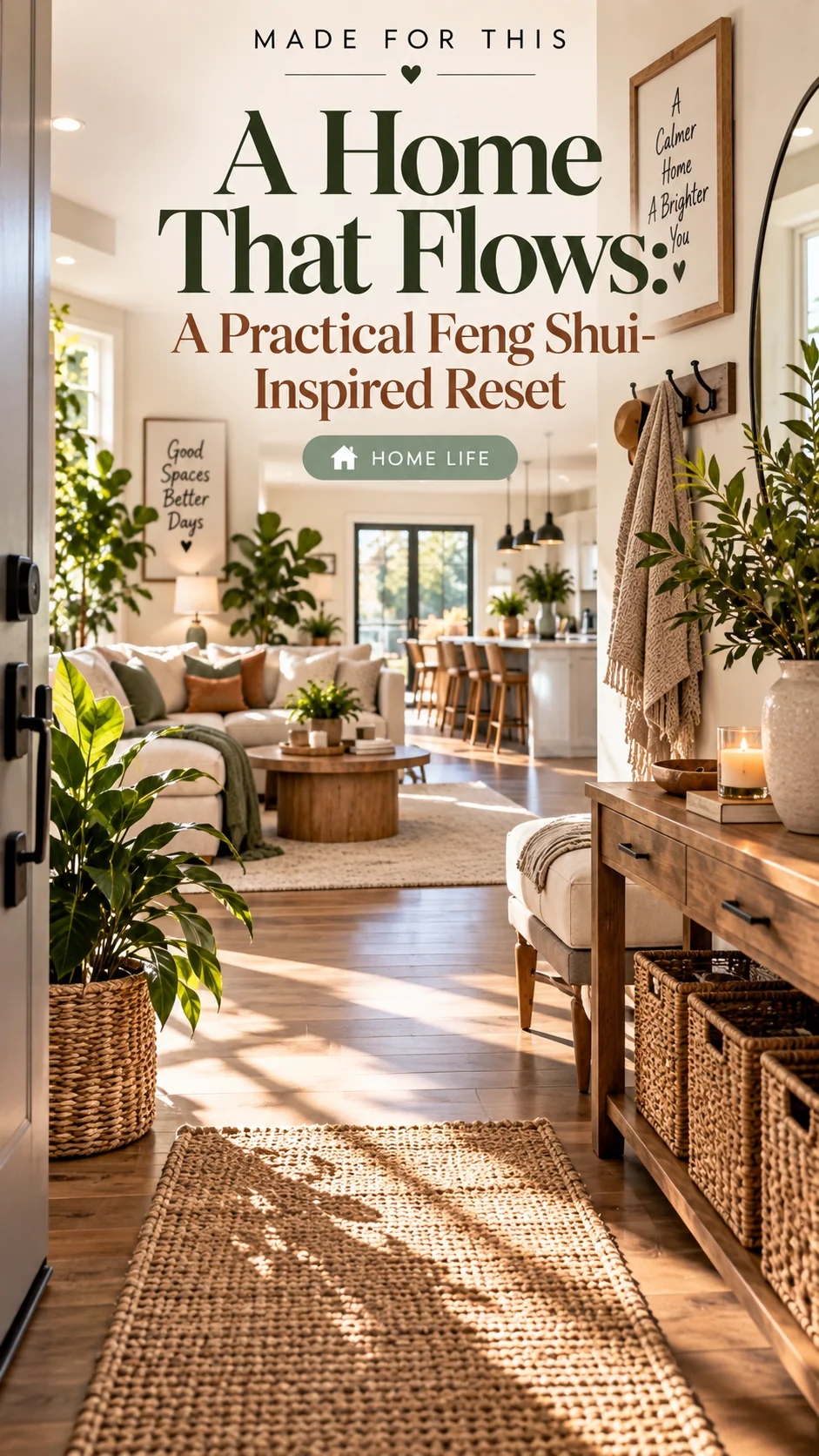
A Home That Flows: A Practical Feng Shui-Inspired Reset
MADE FOR THIS | Home Life
You do not need a new sofa or a cart full of matching baskets to make your home feel easier to live in. Sometimes the most useful change is moving a chair, giving the mail a landing spot or making the route from the front door to the kitchen less awkward. A thoughtful home reset starts with noticing how your family actually uses the rooms.
Begin with the tradition, then choose your approach
Feng shui is a traditional Chinese practice concerned with the arrangement of places and their relationship to the surrounding environment. This article borrows a few ideas about placement and balance for an everyday home reset; it is not a full traditional consultation. Treat the suggestions as design experiments, not promises of better health, wealth or luck. [1]
Walk the routes your family walks
Start at the door with the bag you usually carry. Where does it land? What do you step around? Then walk from the bedroom to the bathroom and from the kitchen to the dining area. Write down three places that repeatedly interrupt those routines. A room can look beautiful in a photograph and still be inconvenient at seven in the morning. Solve one of those interruptions before deciding the room needs more decor.
Create an entrance that welcomes you back
Give keys, shoes and everyday bags one understandable home near the entrance. The right container may already be in a cupboard. Keep the door's swing and exit route clear, and place storage where the smallest family member who uses it can reasonably help. Try one hook per person or a shared basket with simple labels. A system that works when everyone is tired earns its place.
Arrange a place to settle
A feng shui-inspired seating experiment is to choose a comfortable position with a useful view of the room's entrance when the layout allows it. Test whether the arrangement feels practical before keeping it. Avoid blocking windows, doors, vents or walking routes just to follow a diagram. In a shared living room, give conversation, play and reading a little room to happen without making every activity compete for the same surface.
Let family life stay visible
A calmer home does not have to look unoccupied. Keep a small selection of toys in reachable storage, place a reading basket beside a chair and make one surface easy to clear for dinner or homework. Before shifting heavy furniture, make a plan for safe lifting and placement. Follow the manufacturer's anchoring instructions for furniture and televisions; the CPSC's Anchor It campaign addresses tip-over prevention. [2]
Run a seven-day experiment
Choose one change and live with it for a week. Ask whether it reduced a repeated task, made a route easier or helped the family find something. If it did not, revise it. In the bedroom, the experiment could be a clear bedside surface and a comfortable path to the door. In the kitchen, it could be moving everyday mugs within easy reach. End with a five-minute evening reset: return the bags, clear the route and prepare the landing spot for tomorrow. Download the five-page guide to sketch your room and test your own changes.
Companion guide
Open the five-page companion guide