
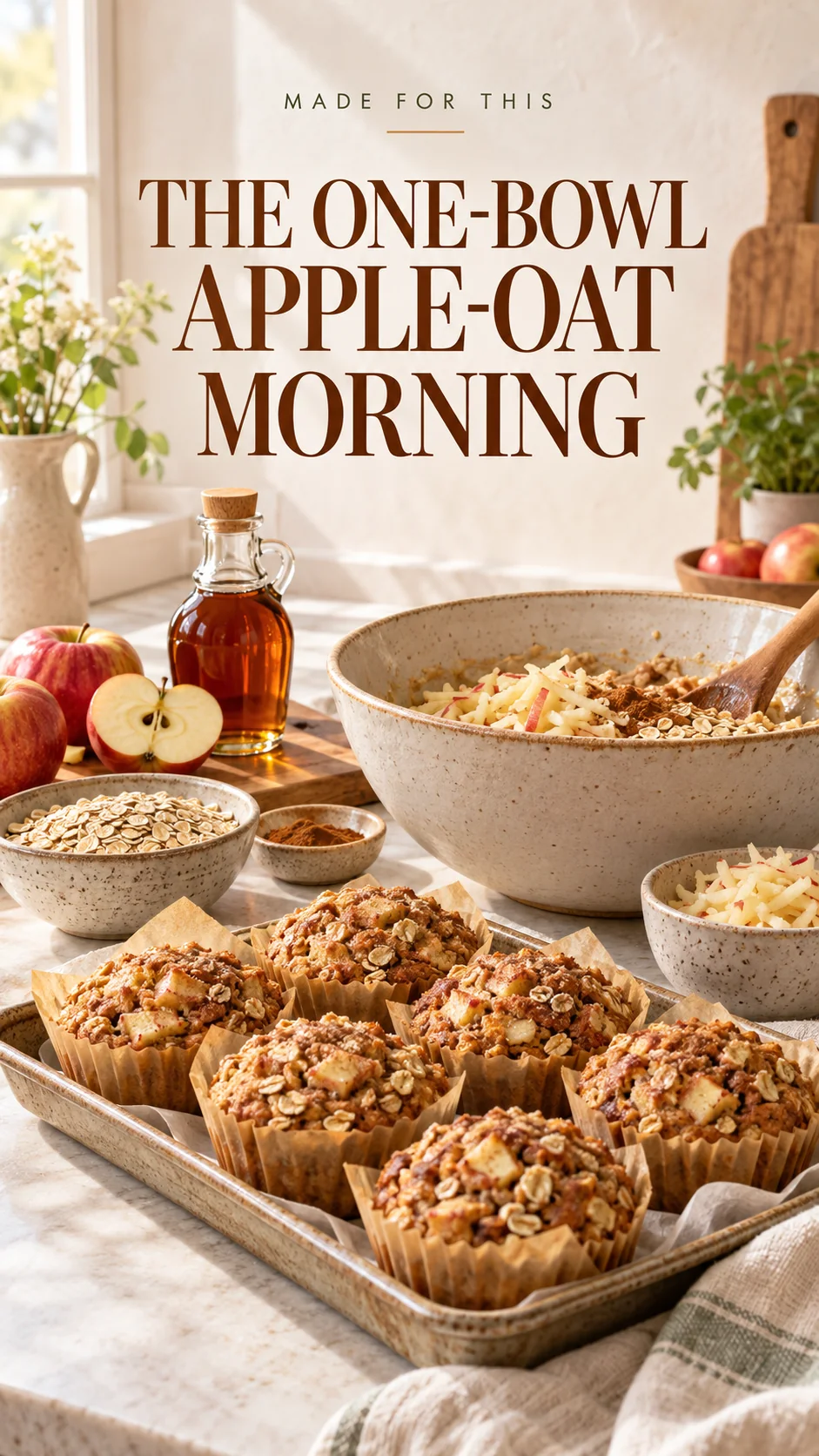
MADE FOR THIS • DAILY EDITORIAL
A warm, repeatable baking ritual for busy family mornings
Oct 8, 2026
BAKING • FAMILY RHYTHMS • PRACTICAL HOME LIFE
The One-Bowl Apple-Oat Morning
Some mornings do not need a more ambitious breakfast. They need one dependable thing that can be mixed without turning the kitchen upside down, baked while the household gets dressed, and saved for the next few days. Apple-oat muffins fit that job beautifully: familiar ingredients, a forgiving method, and enough warmth from cinnamon and maple to make an ordinary weekday feel cared for.
The real value is not the muffin alone. It is the routine around it. When one bowl, one whisk, and one pan are the whole plan, baking becomes easier to repeat—and repetition is what turns a nice idea into a family system. This version is designed for a Saturday prep hour, a slower school morning, or any day when you want breakfast to feel homemade without asking the rest of the day to wait.
Why one bowl changes the morning
Every extra step has a cost when the sink is already filling and someone cannot find a shoe. A one-bowl method removes small points of friction: fewer dishes, fewer transfers, and fewer opportunities to lose track of what has already been added. It also makes the process easier to share. One child can measure oats, another can stir the cinnamon into the dry ingredients, and an adult can handle the grater and oven.
The goal is not speed at any price. It is a calm sequence that is easy to follow. Start by setting out only what the recipe needs, line the muffin pan before mixing, and clear one landing spot for the hot pan. Those three moves create a visible beginning, middle, and end. When the setup is orderly, cleanup becomes part of the bake instead of a second project waiting afterward.
The flexible apple-oat formula
For twelve standard muffins, gather 1½ cups all-purpose flour, 1 cup rolled oats, 2 teaspoons baking powder, 1 teaspoon cinnamon, ½ teaspoon salt, 2 large eggs, ½ cup plain yogurt or unsweetened applesauce, ⅓ cup neutral oil or melted butter, ⅓ cup maple syrup, 1 teaspoon vanilla, and about 1½ cups finely diced or coarsely grated apple. A handful of chopped walnuts or raisins is optional. If your apples are very juicy, pat the grated fruit lightly with a clean towel so the batter does not become heavy.
Heat the oven to 375°F and line a twelve-cup muffin pan. In the bowl, whisk the flour, oats, baking powder, cinnamon, and salt. Make a well in the center; add the eggs, yogurt, oil, maple syrup, and vanilla, then stir until the wet ingredients are mostly combined. Fold the dry mixture inward just until no large flour pockets remain, then fold in the apple. The batter should look rustic rather than perfectly smooth.
Divide the batter among the cups and bake for roughly 18 to 22 minutes, checking early because ovens and apple moisture vary. The tops should spring back lightly and a tester inserted in the center should come out without wet batter. Let the muffins rest in the pan for five minutes, then move them to a rack. That short cooling step protects the crumb while keeping the bottoms from steaming in the pan.
Make the recipe work for your household
A useful family recipe should allow small changes without becoming unpredictable. If someone prefers a softer texture, use finely grated apple and let the batter sit for five minutes before baking so the oats begin to hydrate. For more visible fruit, choose a firm apple and dice it small. If you add nuts, label the container clearly and consider whether the muffins will travel to a school, activity, or workplace with allergy rules.
You can also split the batch before adding extras. Keep half plain, then stir raisins, walnuts, or a small spoonful of seeds into the other half. This is more practical than making two recipes, and it gives children a real choice without turning breakfast into separate cooking orders. A light sprinkle of oats on top makes the variations easy to identify.
Invite children in—without tasting raw batter
Baking is a natural place for children to practice counting, measuring, taking turns, and noticing texture. Keep the jobs concrete: count twelve liners, level a measuring cup, stir ten slow circles, or place cooled muffins into a container. The adult should stay responsible for the hot oven, grater, and moving pans.
There is one safety point worth making explicit: flour is a raw food, and raw eggs can also carry harmful bacteria. The U.S. Food and Drug Administration advises families not to eat or taste raw flour, dough, or batter and to wash hands, bowls, utensils, and work surfaces after contact. That means the fun tasting moment happens after the muffins are fully baked—not while the bowl is still on the counter.
Bake once, create several easier mornings
Once completely cool, place the muffins in a covered container. Keep a few accessible for the next morning and freeze the rest in a single layer before transferring them to a labeled freezer bag. Individual muffins can then move to the refrigerator the night before or be warmed briefly in the morning. If you are unsure about how long a prepared food should be kept, use the FoodKeeper guidance linked below and follow the most conservative storage direction for the ingredients you used.
The best pairing is whatever makes the muffin part of a complete, realistic breakfast for your family: yogurt, fruit, cheese, or an egg may work. The point is not to make the muffin carry the whole meal. It is to remove one decision from the busiest part of the day.
A practical takeaway: build the ritual, not just the recipe
Choose one repeatable baking window and protect it for three weeks. Keep the core ingredients together, store the muffin liners with the pan, and write the formula on one card instead of searching for it each time. After the first batch, note only what matters—more cinnamon, smaller apple pieces, two fewer minutes in your oven. A dependable family recipe is not the one with the most clever ingredients; it is the one you can make again without starting from zero.
If you want more gentle structure for the next step, browse the Made for This guides for practical ideas you can bring into home, learning, and family routines. Start with the area that would make this week feel lighter, then choose one guide that helps you act on it.Browse the Made for This guides
Sources
U.S. Food and Drug Administration — Handling Flour Safely — Official guidance on raw flour, raw batter, kitchen separation, and cleanup.
FoodSafety.gov — FoodKeeper — Official storage guidance for foods and beverages.
Made for This — Guides Shop — Current guide catalog referenced in the closing invitation.