
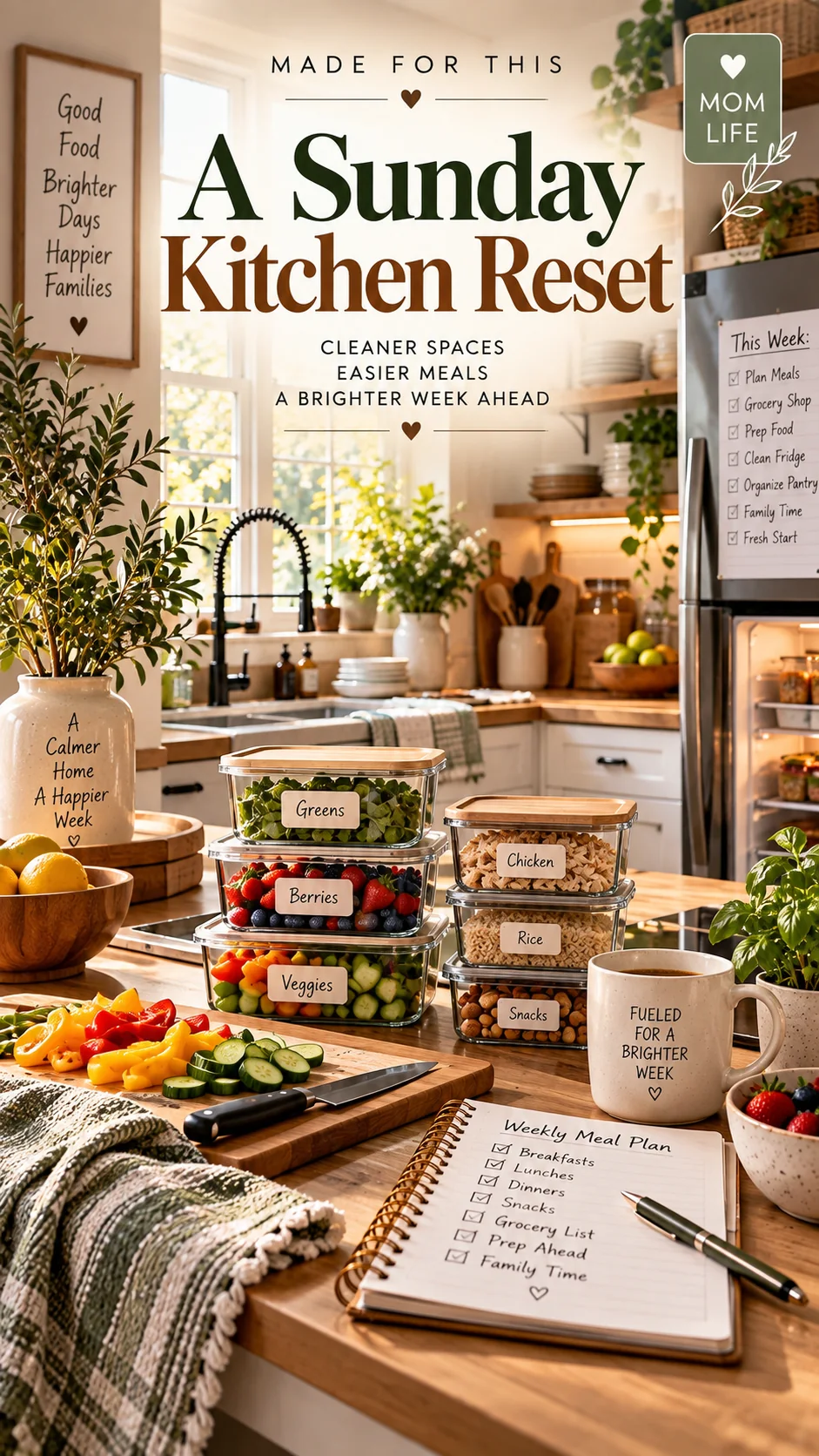
A Sunday kitchen reset can give the week a clearer starting point. Begin with the calendar and the food you already have, then choose a few meals that fit the evenings ahead. Prepare the ingredients your household will use and leave enough room for plans to change. Even a short session can answer the question that gets difficult when everyone arrives home hungry: what can we make tonight?
Plan around the busiest evenings
Look at school, work, appointments, and practices before choosing meals. Mark the evenings when there will be little time to cook. Give those nights an easy option your family already likes, such as sandwiches with a produce side, bean-and-cheese quesadillas, or pasta with a familiar sauce.
Choose the more involved meal for an evening when someone can cook it. Leave an open space for a change of plans. A menu that reflects your actual week is easier to use than a long list of recipes with no place in the schedule.
Check the refrigerator before the shopping list
Look through the refrigerator, freezer, and pantry. Identify what needs attention and what could become a meal with one or two additional ingredients. Follow storage guidance and product instructions as you make that decision.
Perhaps you have tortillas, frozen vegetables, and an unopened package of beans. Those ingredients could support a quick dinner without a separate shopping trip for every item. Write the meal idea beside the ingredients so you remember why they are on the list.
Give your reset a manageable shape
If you have about half an hour, divide it between a quick food check, choosing a few meals, preparing one useful component, and clearing the work area. If you have less time, choose the part that will help tomorrow most.
A useful reset might mean labeling leftovers and making a short list. Another week, it might mean cooking a component and portioning it for the next few days. Decide what the session needs to accomplish before adding more tasks.
Prepare components your family will use
Choose one or two items that fit several meals. You might wash fruit, prepare a container of chopped vegetables, or cook a component for an early-week dinner. Follow appropriate handling and storage instructions for each food.
Give every prepared item a purpose. If you portion vegetables, decide which meal they will accompany. If you prepare extra chicken or beans, plan the next use while you are putting them away. That small decision keeps preparation connected to the week instead of becoming another forgotten container.
Build safe storage into the plan
USDA's food safety basics recommend keeping the refrigerator at 40°F or below and refrigerating perishable food within two hours, or one hour when the temperature is above 90°F. Keep raw meat and its juices separate from ready-to-eat food.
USDA's leftover guidance recommends shallow containers for rapid cooling, using refrigerated leftovers within three to four days, and reheating leftovers to 165°F. Freeze portions you will need later in the week while they are still within their safe storage window. Put a preparation date and intended meal on each container so the next person can follow the plan.
Give one ingredient a second meal
Plan a second use before cooking an extra portion. Beans could fill quesadillas one night and become part of a lunch another day. Cooked vegetables could accompany a dinner and join a different meal the following day.
Keep that second use simple enough to follow when you are tired. "Lunch wraps" is a more useful note than "do something creative." Choose the portions your household is likely to eat and follow the storage plan rather than saving food indefinitely.
Keep one backup meal available
Pick an easy meal with ingredients you can keep on hand and rotate through regularly. The right choice depends on what your household eats and how it needs to be prepared. Write it somewhere visible alongside the weekly plan.
When a practice runs late or an appointment changes, the backup gives you an answer. After using it, add the ingredients you need to replace to the next shopping list. That keeps the routine useful the following week.
Share the work in specific pieces
Ask each available family member to take a clear, suitable task. One person can check the pantry while another writes the list. An older child might organize clean containers, and a younger child can help choose between two familiar dinner ideas.
Keep knives, hot equipment, raw meat handling, and other tasks that require supervision with an appropriate adult. A specific job is easier to understand than a general request to help with everything.
Leave tomorrow a usable workspace
Finish by putting food away, washing the tools you used, and clearing a patch of counter. Put the meal list where the people preparing dinner will see it. Make sure the needed containers and utensils are easy to find.
Your reset has done its job when tomorrow's cook can see the plan and begin. Stop when you have reached that point, even if the kitchen still has other work waiting.
Build the routine with Made for This
Explore the Made for This guidebook previews for the next home and family guide release, and register your interest in the collection you want. You can also browse the Free Library for available resources. Keep a page or notebook with your weekly meal ideas and adjust the routine as you learn what your household uses.