
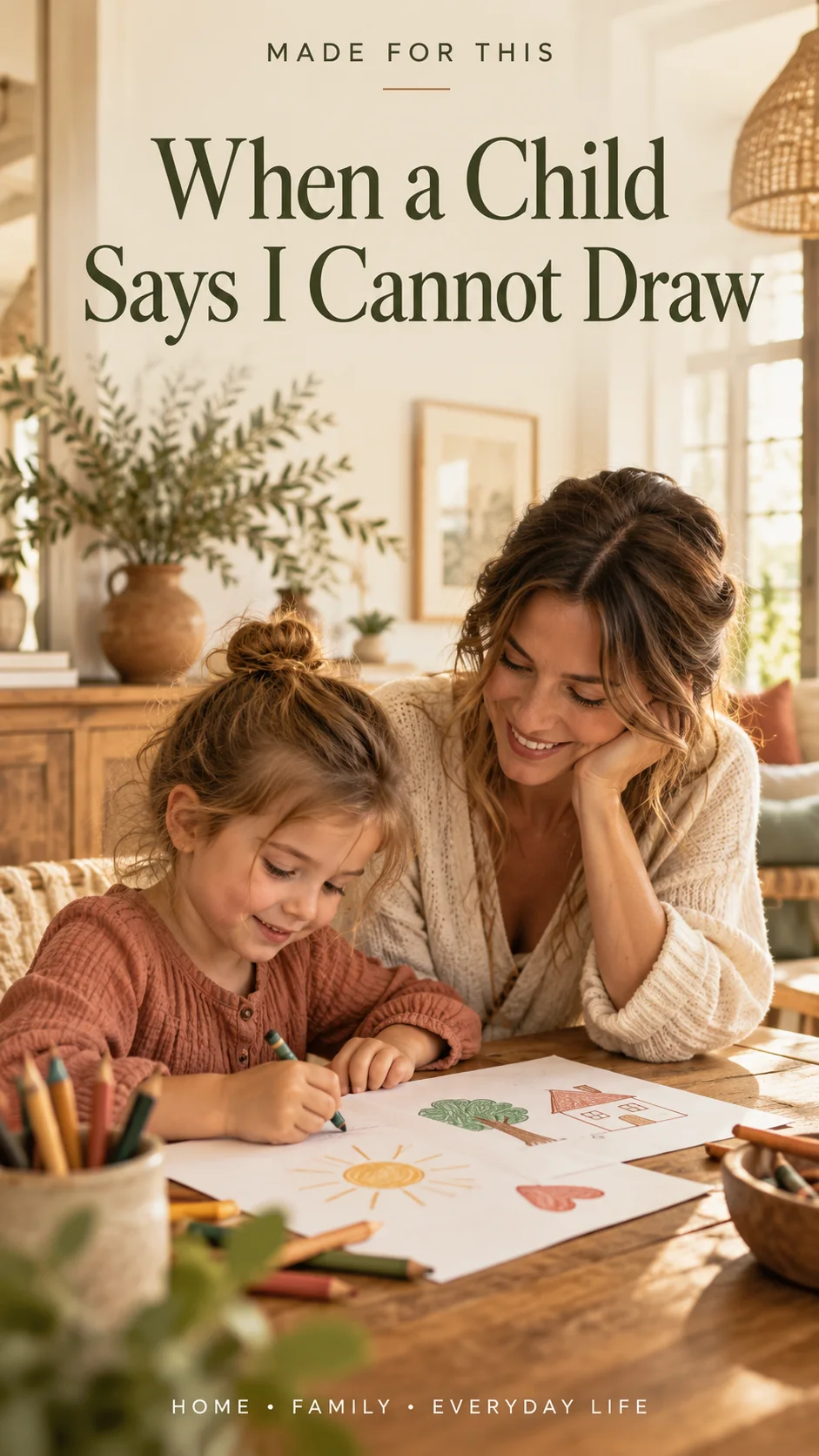
A thoughtful home and everyday life | Made for This
Give a hesitant child a smaller creative starting point and room to make a picture their own.
'I cannot draw' may appear before a child has made a mark. Perhaps the picture in their mind feels too complicated, or someone else's page looks closer to what they wanted. An adult can help by making the next step smaller and leaving the child's choices intact.
The goal for an ordinary home drawing session can be exploration: trying a line, noticing a shape, and making a page that belongs to the child. A finished picture is one possible result, not a requirement for beginning.
Ask which part feels difficult
Listen to what the child means before offering a solution. They may not know how to start a dog, may dislike a line they made, or may simply want company. A question such as 'Which part would you like help getting started?' can make the difficulty more specific.
Offer a small choice. The child might begin with an animal's body shape, a window on a house, or three kinds of lines. A blank page can be a large task; one small feature gives it an entry point. Let the child choose whether to use the suggestion.
If they want an example, use your own sheet. Show one possible way to begin without completing their picture for them. Keep the demonstration short so it does not become another polished image to compare against. The child's page should remain theirs to change.
Try prompts with more than one possible answer
Invite the child to draw a creature that lives in a shoe, a house with a surprising door, or a map of an imaginary garden. These prompts allow many outcomes. There is no reference photograph that the page must match exactly.
Use familiar materials that suit the child's age and ability. A pencil, crayons, and ordinary paper may be enough. If a tool feels frustrating, offer another appropriate one rather than turning the session into a shopping problem. Bigger paper or a different grip-friendly tool may change the experience for a particular child.
You can draw alongside them while keeping your work separate. Describe your own choices simply: 'I am trying a curved line here.' Avoid announcing that you cannot draw either; the child is asking for support, and an adult's self-criticism can add another comparison to the table.
Respond to what the child made and tried
Talk about a concrete detail you can see. 'You used several kinds of windows' or 'That line makes the tail look like it is moving' gives the child something specific to discuss. Ask whether they want to tell you about the picture before deciding what it means.
When a mark goes somewhere unexpected, offer options without insisting on a rescue. The child can incorporate it, try again on another page, or pause. A drawing session does not need a lesson attached to every moment of frustration. The family can make room for another attempt later.
Let the child decide what happens to the page. They may want to display it, keep it in a folder, or use the back for another picture. If they would like a record of their attempts, a small folder can hold different stages without ranking them from best to worst.
A small plan you can use
- Ask which part of the drawing feels difficult to begin.
- Offer one small starting shape or a choice between simple prompts.
- Demonstrate briefly on your own page when the child wants an example.
- Describe a specific choice or detail instead of comparing pictures.
- Let the child choose whether to continue, pause, keep, or display the page.
A child does not need to feel certain about the whole picture to try its first line. A smaller starting point, ordinary materials, and an adult who stays curious can make the table a more comfortable place to create.
Make room for one useful change
Browse Made for This for more practical ideas about family routines, creative learning, study, and a home that supports real life. Choose the smallest version of this idea that would help your household today. You can adapt the rest when you know what works.