
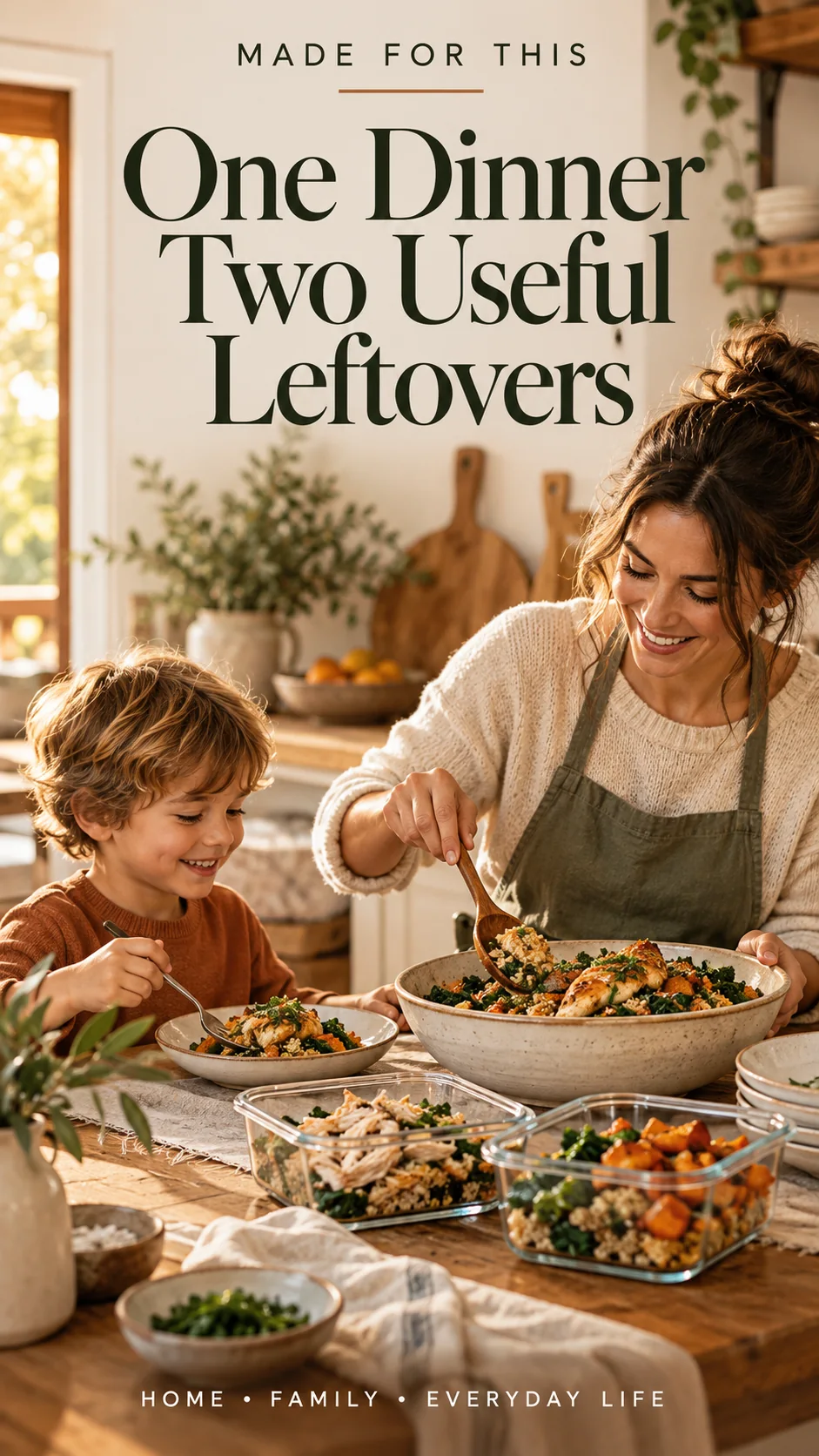
A thoughtful home and everyday life | Made for This
Plan a second use for part of dinner while giving cooked leftovers a clear storage and reheating routine.
Dinner can do a little work for another meal when there is a plan for what remains. A portion of roasted vegetables might become a lunch side, while cooked chicken could be used in a different familiar dish. The useful part is deciding the next job before the containers disappear into the refrigerator.
A second meal depends on appropriate food handling as well as a good idea. Use the food's condition, storage history, and applicable safety guidance to decide what can be kept. A meal plan should never be a reason to use food that may be unsafe.
Choose components that can take another shape
Begin with a dinner the household already likes. Identify one or two components that could work in another meal without requiring a new recipe project. Vegetables might join a grain bowl, or a portion of cooked protein might be used in a familiar wrap. Keep the idea compatible with the household's dietary needs and preferences.
Decide how much to prepare based on the people eating and the next meal you actually expect to make. Extra food is only useful if someone has a plan to use it appropriately. If tomorrow's schedule makes a second meal unlikely, consider a suitable freezing plan instead of leaving containers to accumulate.
Keep the components separate when that helps their next use. A sauce stored appropriately apart from the other ingredients may give the second meal more flexibility. Write the intended next use on a household meal note so another adult can understand the plan.
Give storage a clear place in the dinner routine
USDA advises refrigerating perishable leftovers promptly, within two hours, or within one hour when the temperature is above 90 degrees Fahrenheit. Use a refrigerator at 40 degrees Fahrenheit or below. Food left out beyond the applicable limit should be discarded rather than saved for another meal.
Divide larger quantities into smaller portions in shallow containers to help cooling, following USDA guidance. Do not leave a large pot on the counter until it feels ready. Put a storage label on each container with the food and when it was prepared, so the next person is not guessing.
USDA's general guidance is to use refrigerated leftovers within three to four days or freeze them for longer storage. The meal plan must fit the food's actual handling and any more specific applicable instructions. If the history is unclear, do not use the container just because its planned meal sounds appealing.
Make the next meal visible and practical
Put the second meal on the household's near-term plan. Keep any fresh additions on the shopping list and decide who will prepare it. A container labeled 'roasted vegetables for lunch' gives the ingredient a clearer destination than one left behind larger items.
When reheating leftovers, USDA recommends reaching 165 degrees Fahrenheit throughout, checked with a food thermometer. Check more than one spot as appropriate, particularly after microwave heating. Follow the relevant appliance and food instructions, and reheat only the amount you intend to use.
Review the plan after the meal. Which component was useful, and which required more work than expected? Keep the combination that fit the household's time. A second use earns its place when the food is handled appropriately and the next meal remains simple enough to make.
A small plan you can use
- Choose one familiar dinner and identify two components with a practical next use.
- Prepare only the extra amount the household has a realistic plan to use.
- Refrigerate promptly within USDA's applicable time limit using suitable shallow containers.
- Label the food and plan its use within the appropriate storage window.
- Reheat leftovers to 165 degrees Fahrenheit throughout, verified with a food thermometer.
A useful leftover has a known history and a next job. Connecting dinner, storage, and the following meal can make the kitchen plan more thoughtful while keeping food handling at the center of the routine.
Make room for one useful change
Browse Made for This for more practical ideas about family routines, creative learning, study, and a home that supports real life. Choose the smallest version of this idea that would help your household today. You can adapt the rest when you know what works.
Sources and practical references
USDA: leftovers and food safety