
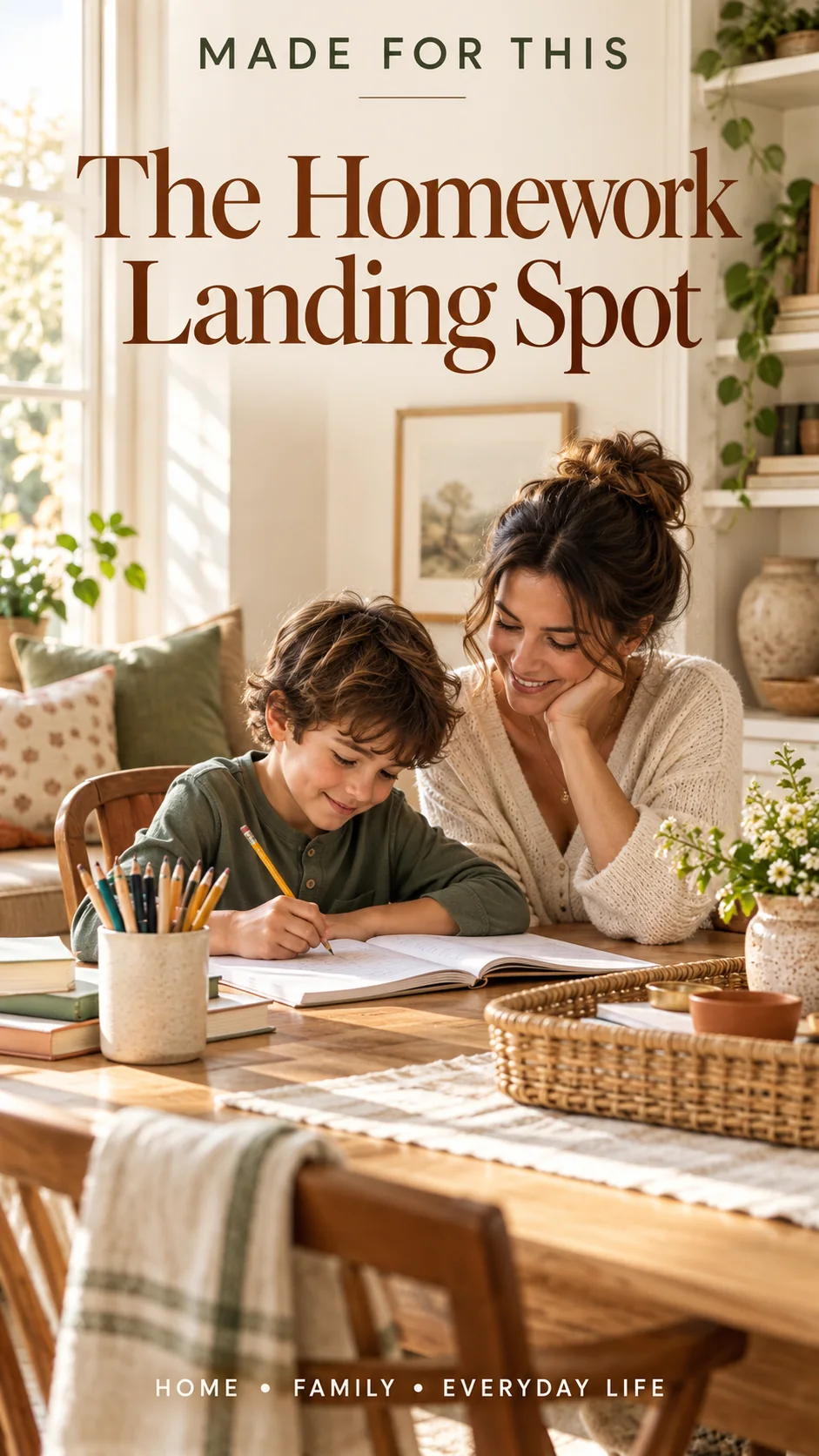
A thoughtful home and everyday life | Made for This
Give schoolwork a predictable place to begin, even when the kitchen table does several jobs.
The backpack lands by the door, a worksheet disappears beneath the mail, and the only pencil anyone can find has no eraser. Homework has not started, but the household is already doing the work of finding it.
A homework landing spot makes that first step easier. It can be a basket beside the table, a small section of a desk, or a tray that moves when dinner begins. The useful part is that everyone knows where the materials go and how to bring them back.
Choose the place by how your family uses the room
Look at where schoolwork already happens. A child who needs an adult nearby may use the kitchen table more comfortably than a separate desk. A child who prefers a quieter setting may need a small space away from the main conversation. Begin with the household you have and choose a place you can reach easily.
Give the landing spot a clear boundary. One basket can hold the current folder, a notebook, and a pencil pouch. A tray can hold loose materials while the table changes jobs. Avoid filling it with every school supply in the house; the child should be able to find the thing needed for today's work.
If siblings share the area, give each one a recognizable folder or small container. The labels can be words, colors, or drawings that the children understand. The aim is a predictable return path for the materials, so the adult does not have to sort the entire table every afternoon.
Build a small start routine
Make the first few minutes ordinary. Bring the folder to the landing spot, check what needs attention, and choose the first task. A short conversation can clarify whether the child needs help understanding the assignment or simply finding the materials.
Try asking, 'What do you need to start this part?' That question can reveal a missing instruction, a ruler, or a little room on the table. It also gives the child a role in preparing the space. The adult can support the start without taking over every decision.
Keep the routine flexible around hunger, activities, and the family's schedule. A landing spot does not require the same clock time every day. It gives schoolwork a recognizable beginning whenever the household is ready. If a task needs a teacher's clarification, record the question and keep it with the relevant paper.
Make the finish as easy to recognize as the start
At the end, sort the materials by what happens next. Completed work goes into the school folder. A question stays with the assignment. Tools return to the pouch or tray. A loose page that needs an adult signature should have a specific place rather than returning to the general pile.
Invite the child to help reset the spot. A small finish routine teaches the location of things through use. It is also easier to repeat when there are only a few items to put away. If the basket keeps overflowing, remove supplies that are not part of the current work.
After several afternoons, ask what still goes missing. The answer may be one extra pencil, a clearer folder label, or a place for unfinished work. Change that detail first. The system should grow from the family's experience rather than from a shopping list of organizing products.
A small plan you can use
- Choose one table, desk corner, or movable tray where schoolwork can begin.
- Keep the current folder, notebook, and a small tool pouch there.
- Use a brief start question to identify the first task and any missing item.
- Give completed work and adult-signature papers a clear next destination.
- Reset the spot together and adjust the detail that keeps causing friction.
A landing spot earns its place through ordinary use. When the folder, pencil, and next step are easy to find, the household can spend less time preparing to begin and more time on the work in front of it.
Make room for one useful change
Browse Made for This for more practical ideas about family routines, creative learning, study, and a home that supports real life. Choose the smallest version of this idea that would help your household today. You can adapt the rest when you know what works.