
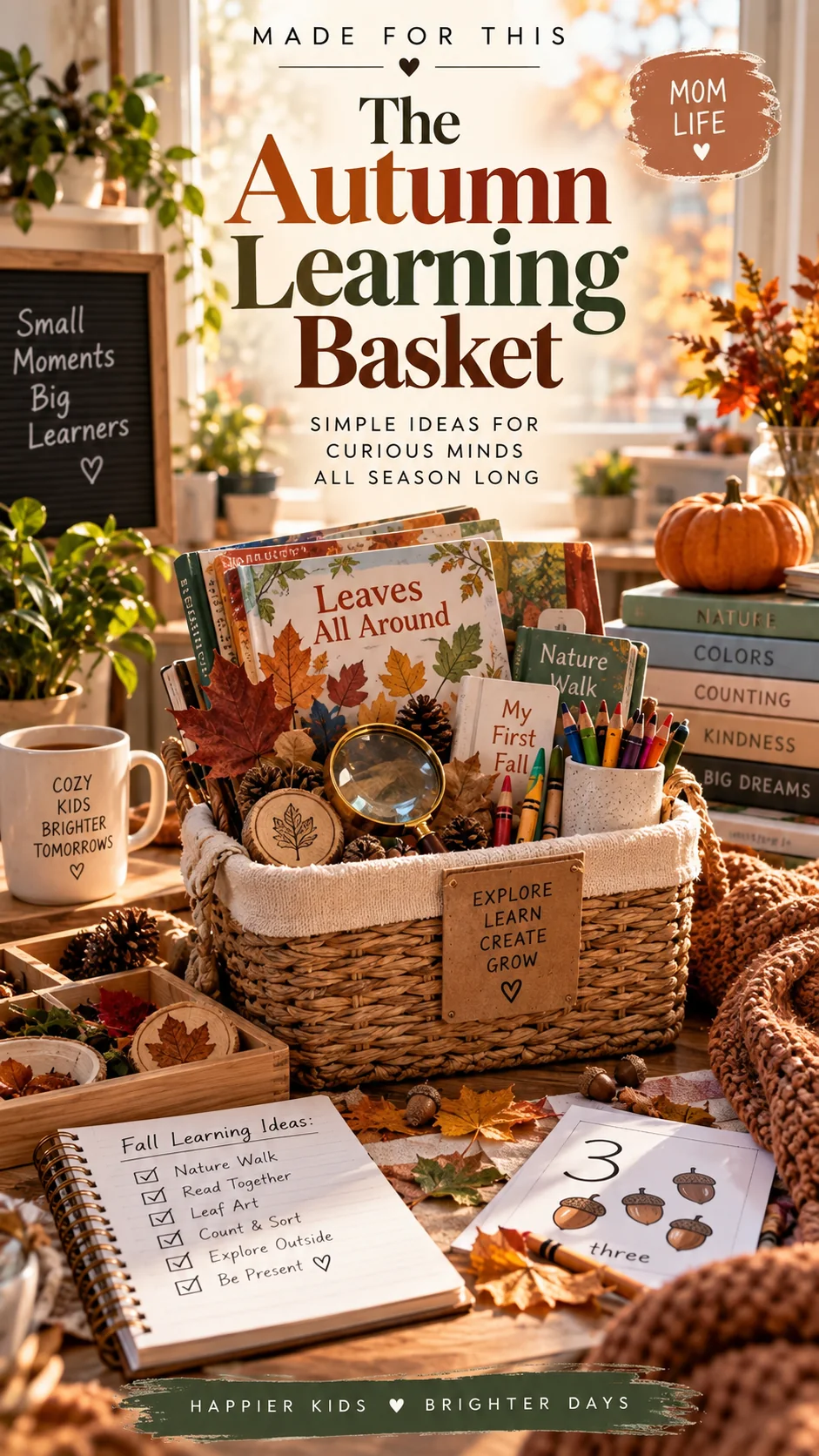
An autumn learning basket gives a preschooler a small invitation to read, draw, and explore at home. Put a familiar book, a few drawing materials, and one simple activity together where you can sit with your child. When the basket comes out, the next step is easy to see. You can spend a few minutes on it after school, during a quiet morning, or while an older sibling finishes homework.
Start with materials you already use
Choose a basket, a small box, or a sturdy bag. Add blank paper, age-appropriate crayons, and a book your child enjoys. For an autumn theme, you can cut large leaf shapes from colored paper and add a picture of a pumpkin, an apple, or a farm.
Keep the selection small enough that the child can find what they want. A page of paper leaves and a few crayons are plenty for the first session. You can add something new when the existing materials stop inviting play.
Let your child choose the starting point
Offer a simple choice: "Would you like to read the book or make a leaf picture?" Follow the answer. If your child wants to talk about the farm illustration for several minutes, let that conversation become the activity.
NAEYC's family literacy guidance encourages easy access to writing materials, reading together, and asking children to explain their drawings. It also suggests writing down the child's words. Your basket can make those ordinary interactions convenient without turning them into a formal lesson.
Read and notice something together
Open the book and ask what your child sees. Try a question about an actual detail: "Where is the red barn?" or "What do you think that animal is doing?" Give the child time to answer, point, or make a sound.
You can return to one favorite page several times. Read the words, describe a picture, or invite your child to join in a repeated line. If they prefer to turn the pages themselves, help them handle the book and follow their interest.
Sort paper leaves in more than one way
Place a few large paper leaves on the table. Start with something visible, such as putting the yellow leaves together. Count a small group while touching each leaf once. Then ask whether the child wants to make a different group.
An older preschooler might sort by shape or arrange the leaves from small to large. A younger child may simply choose a color and move the leaves around. Keep the conversation connected to what they are doing: "You put these two together. What did you notice?"
Turn a drawing into a story
Offer a blank page or a simple printable with room to add details. Your child can draw a farm animal, make marks around a leaf, or choose a completely different subject. Ask, "Tell me about your picture."
Write their explanation underneath or on the back, as NAEYC suggests. Read those words back to them. If they say, "The cow is going to school," keep that sentence. Their idea gives the page meaning and lets you revisit the story together.
Try a short session that can change
For a roughly ten-minute starting point, read one page together, sort a few leaves, and make a drawing. Treat that timing as an invitation you can adjust. If your child settles into a picture, leave room to continue. If they are tired or ready to move, put the basket away.
The same materials can return tomorrow. You can ask whether the cow reached school, look for another yellow leaf, or reread the page that made your child laugh. Repetition gives you an easy way to begin without preparing a new project every day.
Make space for different ages and preferences
An older sibling can read aloud or write the younger child's dictated story. Give each child their own paper so the younger one still has a choice about what to make. Some children prefer larger crayons, plain paper, or pointing to pictures instead of talking.
Choose materials that suit the children using them. Stay with young children during the activity, keep small parts out of their reach, and use printed or paper leaves when outdoor objects are unsuitable. An autumn theme can work entirely with pictures and paper.
Reset the basket together
At the end, ask your child which picture they want to keep and which book should stay in the basket. Put the crayons back in their container and save a few blank pages for the next time. Place finished work somewhere you can look at it together.
You can photograph a finished drawing for your own family collection, or write its title on the back. When your child sees you keeping their work, you have something specific to talk about the next time the basket appears.
Choose a printable with room for imagination
Look for pages with clear shapes and enough open space for additional marks. A farm page might lead to a conversation about animals. A leaf page might become a map, a collage, or a picture of a windy day.
Start with one page and let the child's response guide the next choice. A printable can be a useful beginning for a shared activity, while the conversation and the child's own drawing give it a personal direction.
Find your next activity with Made for This
Visit the Made for This Free Library for an activity to add to your basket. Explore the guidebook previews for a look at future collections, and register your interest in the release that fits your family. Pair the available pages with a favorite book and a few familiar materials so you can start your next session with everything close at hand.