
A thoughtful home and everyday life | Made for This
Give school papers a short route from the backpack to the action they need.
School papers can become a pile because they represent different jobs. One needs a signature, another contains an event detail, and another is a drawing the child wants to keep. A single stack asks the adult to rediscover those differences every time.
A school-paper basket can make the first sort easier. Keep the categories few and give each category a next action. The basket works best when it is part of a short routine the household understands.
Choose three useful destinations
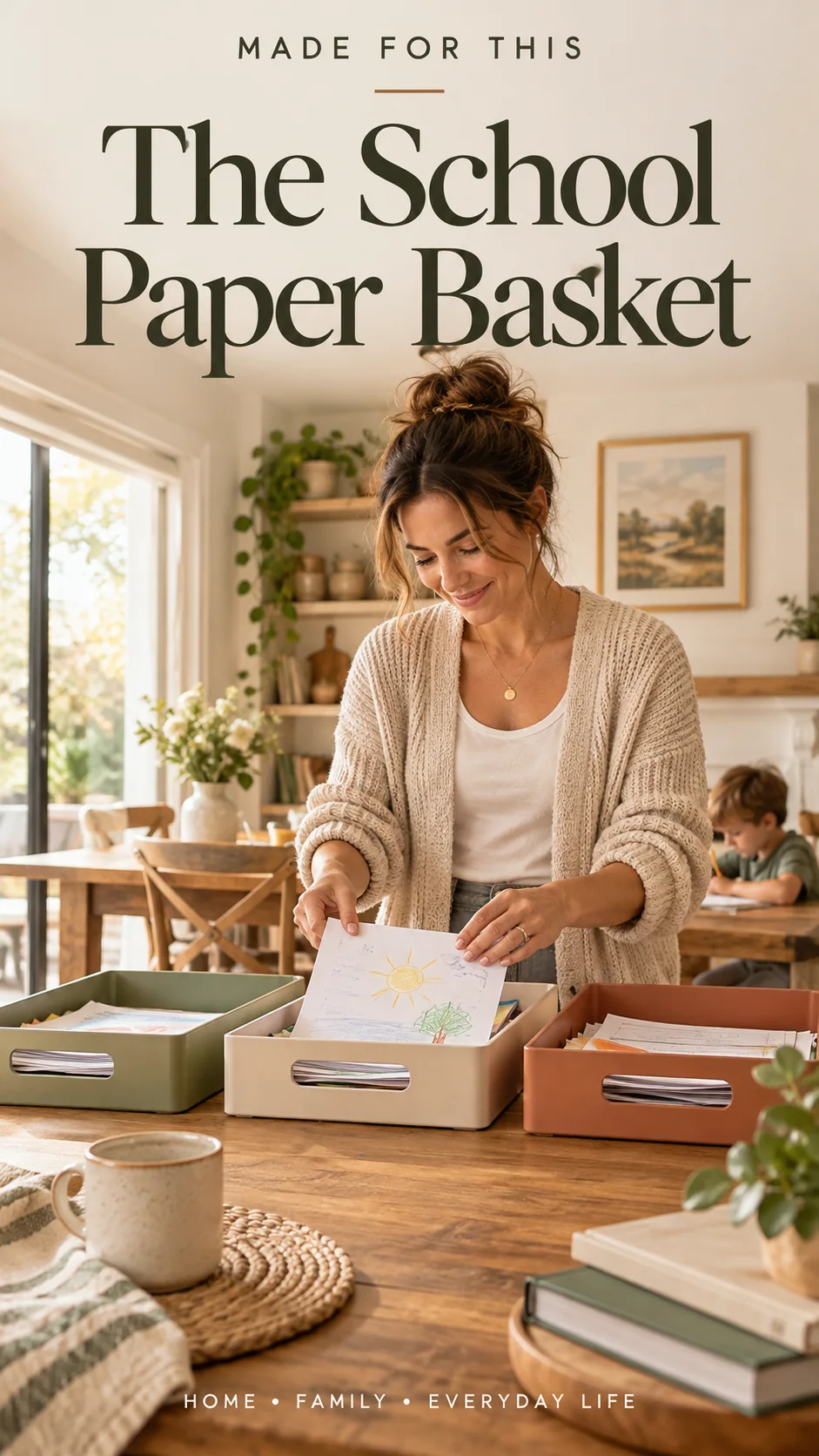
Try three categories: action, reference, and keep. Action papers need something done, such as a signature or a response. Reference papers contain information the household may need later. Keep papers are selected work or artwork worth saving.
The categories can be folders in one basket, three trays, or labeled sections of a file. Choose what fits the space and what the users can recognize. A child's drawing on the label may be more useful than a tiny printed word. The system should help people sort without requiring an explanation every time.
Keep the categories tied to real needs. If a reference paper is no longer useful, let it leave the basket through the appropriate household disposal routine. If every drawing goes into keep, plan a later selection together. A category needs a boundary to remain easy to use.
Sort at a moment that already exists
The routine might happen when the backpack is opened, after a snack, or while the adult checks the next day's plans. Choose a moment the household can recognize rather than adding another elaborate appointment to the day.
Ask the child to explain the paper before deciding where it goes. They may know which worksheet needs to return or which note came with a teacher's instruction. The adult can help check what action is required and who will handle it.
If a paper includes a deadline or event, move the needed information into the family's actual planning tool. A date left in the basket is easy to overlook. Keep the original if it contains details you may need, but make sure the action has a place where the responsible adult will see it.
Finish the action and return the paper
A signed form is not finished until it reaches the school folder or the submission route. Build that return step into the routine. Put completed papers in the backpack folder rather than placing them back in the general basket.
Review reference and keep items occasionally. A short selection session can give a child a role in choosing artwork to save. Photographing or scanning an item may be useful for some households, but it should be a choice that fits how the family actually keeps memories.
If the basket fills quickly, look for the unresolved action. Perhaps nobody knows who signs forms, or reference papers never leave. Repair that specific step. The goal is a paper route that supports the family, with enough simplicity that it can work on a busy afternoon.
A small plan you can use
- Set up action, reference, and keep sections in a basket or file.
- Sort papers at a predictable moment with the child's input.
- Move deadlines and events into the family's planning tool.
- Return completed forms through the correct school route.
- Review the remaining papers and remove items whose purpose has ended.
A useful paper basket gives each sheet somewhere to go next. The small routine matters more than the container: notice the paper, name its job, and complete its return path.
Make room for one useful change
Browse Made for This for more practical ideas about family routines, creative learning, study, and a home that supports real life. Choose the smallest version of this idea that would help your household today. You can adapt the rest when you know what works.