
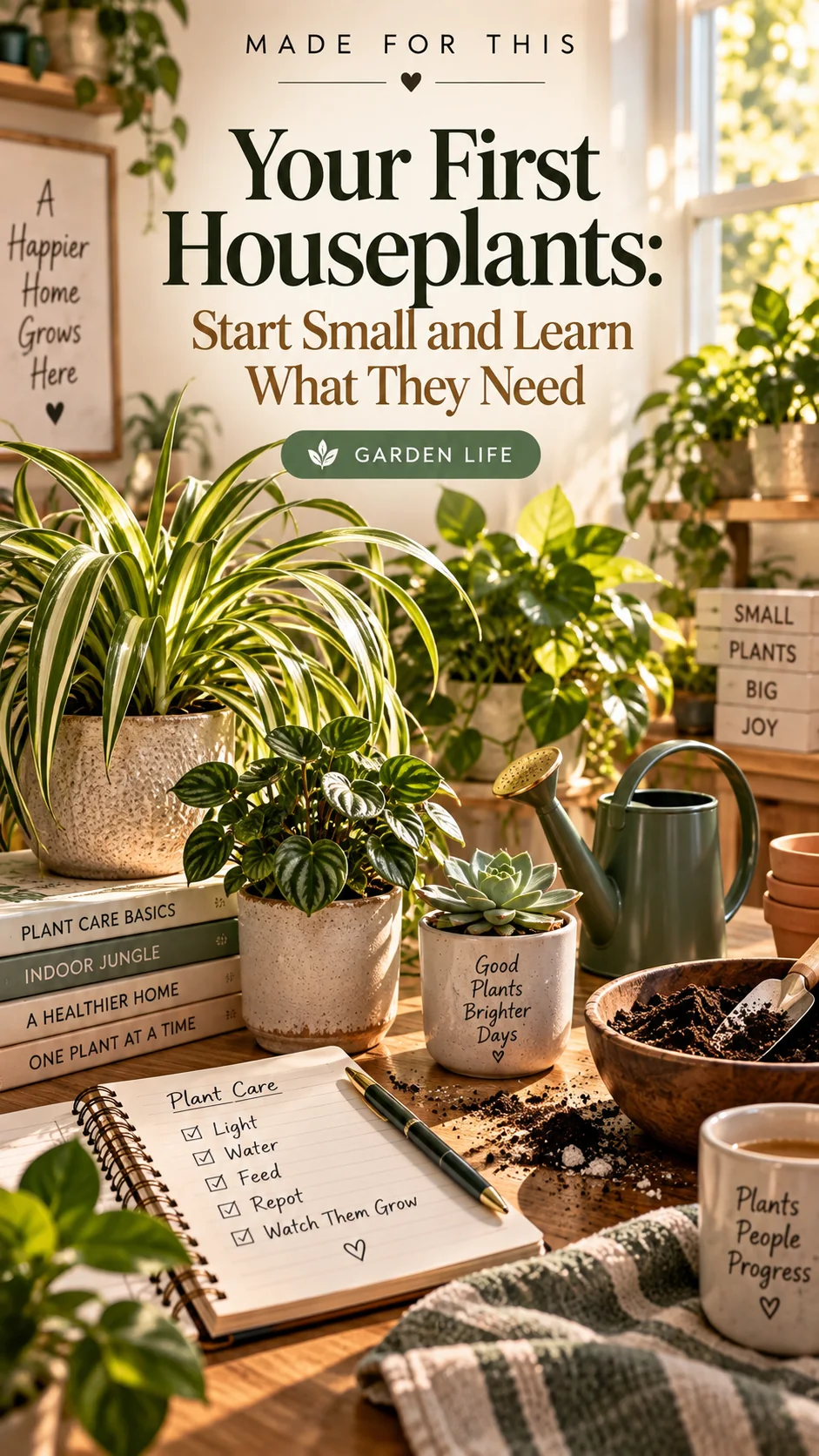
Your First Houseplants: Start Small and Learn What They Need
MADE FOR THIS | Garden Life
A first plant does not need to become a whole collection by the weekend. One healthy plant in a suitable spot can teach you more than six plants with six different problems. The goal is to learn a simple rhythm: notice the light, check the soil and make one thoughtful adjustment at a time.
Choose the spot before the plant
Look at the window you actually have available. Notice how the light changes across the day and whether trees or nearby buildings block it. 'Low light' still means some useful light; a dark corner does not become a good growing spot because a plant is described as easy. University of Minnesota Extension explains how indoor light influences plant selection. Start with that match instead of choosing only by the pot's color. [1]
Try a spider plant for leafy movement
Spider plant, Chlorophytum comosum, offers arching leaves and eventually small plantlets. NC State Extension describes medium indirect light and moist, well-drained conditions, with care to avoid soggy soil. Keep it out of harsh direct sun that can damage leaves. A stable shelf with room for the foliage is a better first home than a hanging spot you cannot comfortably reach to inspect. [2]
Try peperomia for a compact shelf plant
Baby rubber plant, Peperomia obtusifolia, has thick, rounded leaves and a compact shape. It is a different plant from the larger rubber tree often sold under a similar common name. Give it bright indirect light and avoid keeping the potting mix constantly wet. The botanical name on the label helps you look up the correct care rather than borrowing advice for a different species. [3]
Try a small haworthia-type succulent
Zebra haworthia, Haworthiopsis attenuata, is a small succulent option for a bright spot. It needs a freely draining mix and time for the mix to dry between waterings. It is a useful choice for someone who enjoys checking a plant without always adding water. Verify the botanical label because similar-looking succulents may be sold under broad common names. [4]
Build a checking routine, not a watering calendar
Choose two days a week to inspect your plant. That is a reminder to look, not an instruction to water twice a week. Feel the potting mix, notice the pot's weight and check the species' needs. When watering is needed, let excess drain and empty the saucer. A decorative outer pot should not become a hidden reservoir around the nursery pot. Write down the date and what you noticed; a short record makes patterns easier to see.
Buy less, observe more
For a first setup, choose the plant, a pot with drainage, a saucer and appropriate potting mix if needed. Wait on a shelf full of fertilizers and gadgets. Inspect a new plant for pests and damaged growth before bringing it close to existing plants. Keep plants and supplies away from children or pets who might chew them, and check the exact species for household safety before purchase. A plant's 'easy care' label is not a safety label.
Let the first month be a learning month
Take one photo from the same angle each week. If a leaf yellows, review light, moisture and recent changes before trying several treatments at once. Your first success is learning what the plant is telling you through observable conditions. Download the five-page beginner guide for plant choice cards and a four-week observation log.
Companion guide
Open the five-page companion guide
Sources and further reading
[1] University of Minnesota - Lighting for indoor plants