
A thoughtful home and everyday life | Made for This
Add one gentle observation prompt to a familiar walk and let the family's curiosity set the pace.
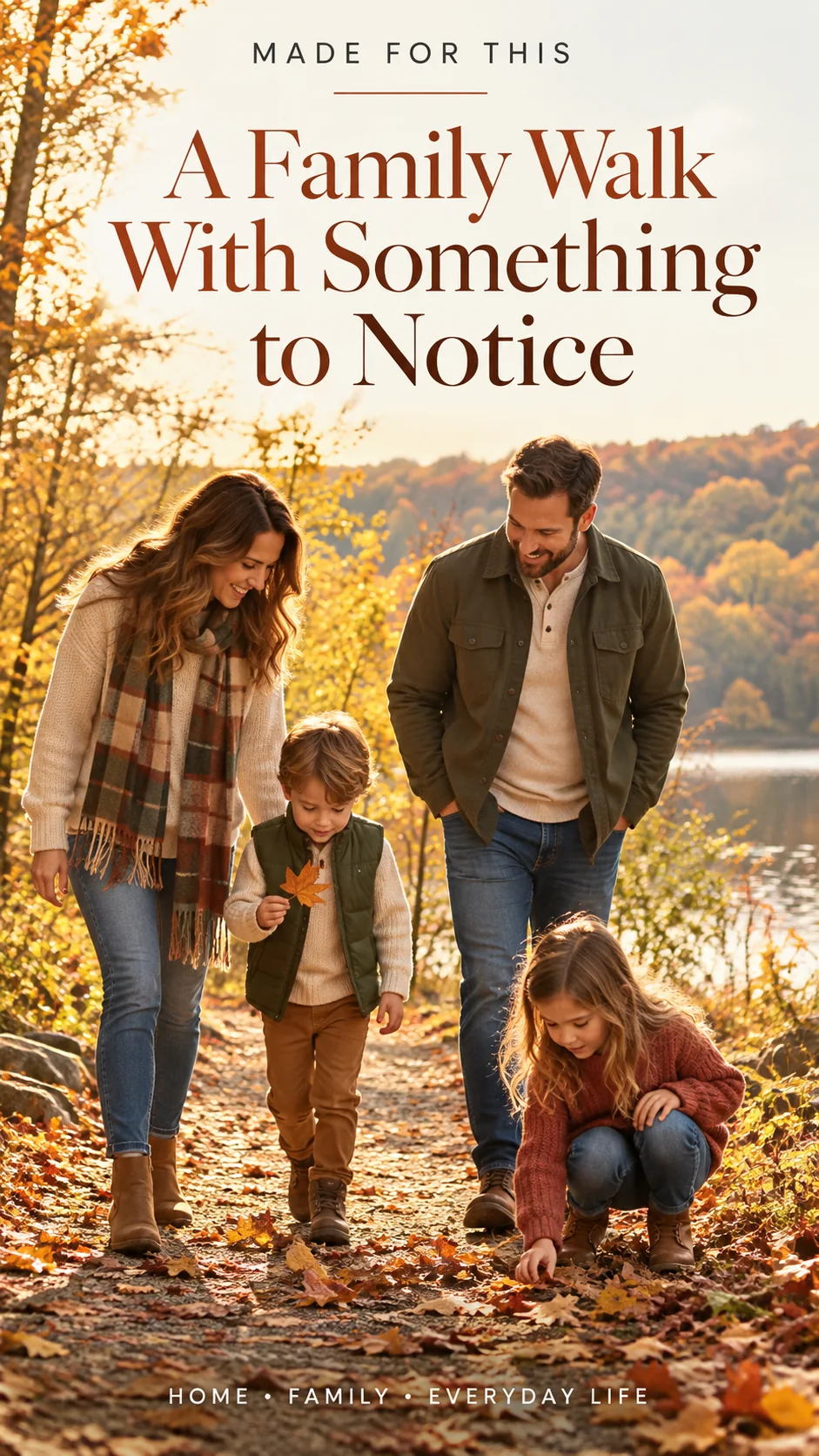
A family walk can begin with a simple invitation: find three different leaf shapes, notice a sound, or choose a color to look for. One prompt gives people something to share without turning the outing into a long activity plan.
Choose a route and duration that suit the people walking. A short familiar loop can hold plenty to notice. The useful part is the shared attention, with room for a child or adult to become interested in something you did not plan.
Choose the route before the observation game
Consider the weather, walking surfaces, access needs, and the energy of the people joining. Use a route the responsible adults can manage appropriately. A stroller, mobility aid, or younger child's pace may change what makes a comfortable outing. Plan around those needs first.
Bring the ordinary items the family needs for the chosen walk, and follow local rules for crossings, paths, and shared spaces. The observation prompt should not pull attention away from moving safely through the route. Pause in an appropriate place before looking closely or taking a photograph.
Give the walk a clear turnaround or ending point. A short loop can be enough, particularly if the household is fitting it between other plans. Leaving room to finish while people still feel comfortable can make another walk easier to choose later.
Use one prompt that allows different answers
Try a prompt such as 'Notice something round, something rough-looking, and something that moves.' People can find different examples on the same route. A younger child might point to a wheel; an older child might notice a seed pod or a cloud shape. There is no need to decide whose answer is best.
For sounds, pause together and describe what each person hears. Keep the activity as an invitation rather than requiring everyone to participate in the same way. Someone may prefer to walk quietly and share an observation later.
Look without disturbing plants, wildlife, or other people's property. Leave unfamiliar items in place. A drawing or a description can keep the memory without taking the object home. If the family uses photographs, respect the people nearby and keep the focus on the observation you chose.
Bring one small memory home
At the end, ask each person whether there is something they want to remember. The answer might be a shape, a sound, or a question. Let the conversation remain brief if everyone is ready for another part of the day.
A child who wants to continue can sketch the observation or describe it to someone at home. A family notebook can hold a few drawings from different walks. Keep it optional so the outing does not acquire a required assignment afterward.
Use the family's interest to choose another prompt next time. If everyone noticed birds, the next walk might focus on sounds heard from the path. If the color game worked well, repeat it with another color. Familiar activities can change through the place and the people rather than through more equipment.
A small plan you can use
- Choose a manageable route, duration, and ending point for the people joining.
- Use one observation prompt with several possible answers.
- Pause appropriately before looking closely and keep attention on the route.
- Leave plants, wildlife, and unfamiliar objects undisturbed.
- Share or sketch one memory afterward if the family wants to continue.
A familiar walk can feel different when people have one small thing to notice together. Keep the prompt light, the route manageable, and the family's curiosity welcome wherever it leads.
Make room for one useful change
Browse Made for This for more practical ideas about family routines, creative learning, study, and a home that supports real life. Choose the smallest version of this idea that would help your household today. You can adapt the rest when you know what works.