
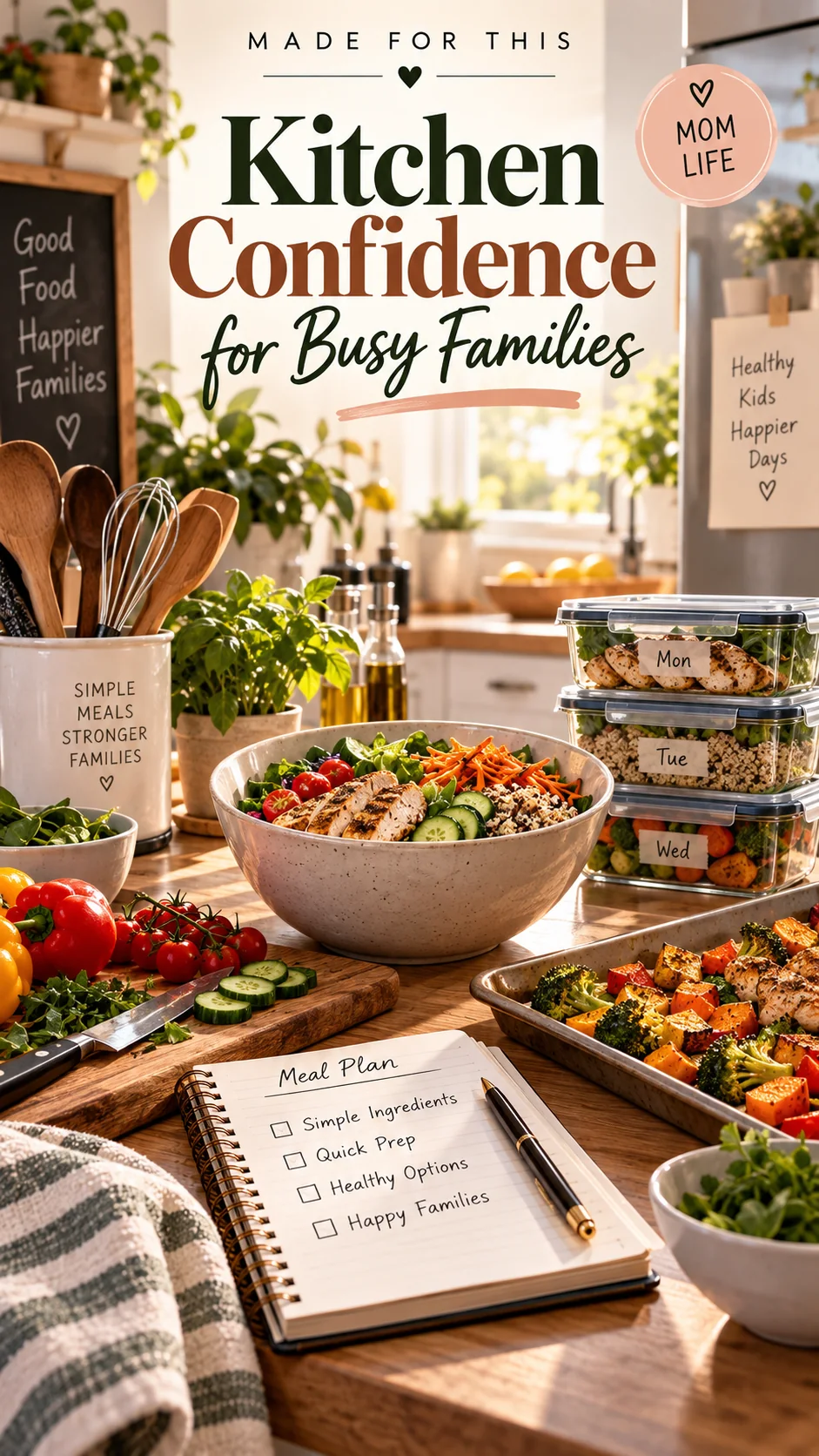
Kitchen Confidence for Busy Families: Simple Meals, Real Life, Less Stress
A Kitchen That Works for Real Life
Confidence in the kitchen rarely comes from learning dozens of recipes. It comes from knowing what to do when everyone is hungry, the day ran long, and you still want dinner to feel like part of home instead of one more emergency. Busy families do not need a perfect weekly menu or a refrigerator full of specialty ingredients. They need a few dependable patterns that can flex when schedules change. Once those patterns become familiar, cooking starts to feel less like a performance and more like a skill you can actually use.
Start With a Dinner Formula, Not a Recipe Collection
A simple formula can carry more weight than ten saved recipes you never open. Think in three parts: one main item, one easy produce side, and one quick extra that makes the meal feel complete. That might be roasted chicken with broccoli and rice, pasta with sautéed vegetables and garlic bread, tacos with beans and a bowl of fruit, or soup with sandwiches and a crunchy side. The point is not nutritional perfection or restaurant-level variety. The point is having a structure that helps you make a decision quickly.
When you shop, buy ingredients that can move between formulas instead of locking every item to one recipe. Tortillas can become tacos, breakfast wraps, quesadillas, or quick pizzas. A bag of frozen vegetables can support stir-fry, pasta, soup, or a sheet-pan meal. Cooked rice can become a side one night and fried rice the next. Flexible ingredients reduce the pressure to predict exactly how the week will go.
Keep a Short List of “Rescue Meals”
Every household benefits from three to five meals that require almost no creativity. A rescue meal is not a failure meal; it is the plan for the nights when the original plan falls apart. Good examples include eggs and toast with fruit, grilled cheese and tomato soup, bean-and-cheese quesadillas, pasta with jarred sauce and frozen vegetables, or rotisserie chicken with microwave rice and salad.
Write your rescue list somewhere visible. The advantage is psychological as much as practical: when the answer is already chosen, dinner stops taking up mental space. You can still change your mind, but you are no longer starting from zero at 6:15 p.m.
Prep Components Instead of Entire Meals
Meal prep often sounds like spending half of Sunday cooking five identical containers. That works for some families, but it is not the only approach. Component prep is lighter and more flexible. Wash fruit, chop one or two vegetables, cook a pot of rice or pasta, mix a simple sauce, or portion snacks. Even twenty minutes of preparation can remove several small decisions from the next few days.
The best component is one your family will actually use. If everyone eats cucumbers, slice cucumbers. If no one wants hard-boiled eggs, do not make a dozen just because they look organized in a refrigerator photo. Your prep should match your household, not somebody else’s system.
Make One Meal Do Two Jobs
Leftovers are easier to enjoy when they are planned as ingredients instead of repeats. Roast extra vegetables and fold them into eggs the next morning. Make more taco filling than you need and turn it into nachos or rice bowls. Cook a larger batch of chicken and use the extra for wraps, pasta, or lunch boxes. The second meal should feel related, not identical.
This approach also helps with food waste because you are deciding in advance where extra portions will go. Labeling a container “Wednesday lunch” or “taco bowls” makes it easier to remember why you saved it in the first place.
Create a Five-Minute Reset After Dinner
Kitchen confidence is easier to keep when tomorrow does not begin with tonight’s mess. A five-minute reset is not a deep clean. Load or stack the dishes, wipe one counter, put leftovers away, and make sure the sink is usable. If another family member can help, assign one repeatable job instead of asking everyone to “clean up.”
That small reset protects the next meal. A clear cutting board and an empty patch of counter space can be the difference between cooking something simple and giving up because the kitchen already feels overwhelming.
Keep Food Safety Simple and Visible
A few dependable habits matter more than complicated rules. Keep raw meat separate from ready-to-eat foods, wash hands and work surfaces often, use a food thermometer when cooking meat or poultry, and refrigerate perishable leftovers promptly. USDA guidance says poultry should reach 165°F, and perishable foods should generally be refrigerated within two hours of cooking or leaving cold storage. Most cooked leftovers are best used within three to four days. Those basic habits help make batch cooking and planned leftovers safer and easier to manage.
A Realistic Weeknight Example
Imagine a Tuesday when school pickup runs late. Instead of abandoning dinner, use the formula: warm tortillas, reheat leftover chicken or beans, add shredded lettuce or frozen corn, and put fruit on the table. While everyone eats, portion the extra filling for tomorrow’s lunch. After dinner, spend five minutes resetting the kitchen and move one frozen item to the refrigerator for the next evening. Nothing about that routine is elaborate, but it creates momentum.
Kitchen confidence grows when the household sees that dinner does not have to be impressive to work. Repetition is useful. Familiar meals are useful. Shortcuts are useful. The goal is not to prove that you can cook everything; it is to build a kitchen rhythm that keeps feeding real people on real days.
PRACTICAL TAKEAWAY
Choose three dinner formulas, three rescue meals, and one five-minute cleanup routine. Put the list somewhere visible this week. The next time the day goes sideways, use the system before you use your stress.
Tonight, write down one meal your family already likes that can become a repeatable formula. Then choose one ingredient from that meal that can do a second job later in the week. Build confidence by repeating what works, not by constantly starting over.