
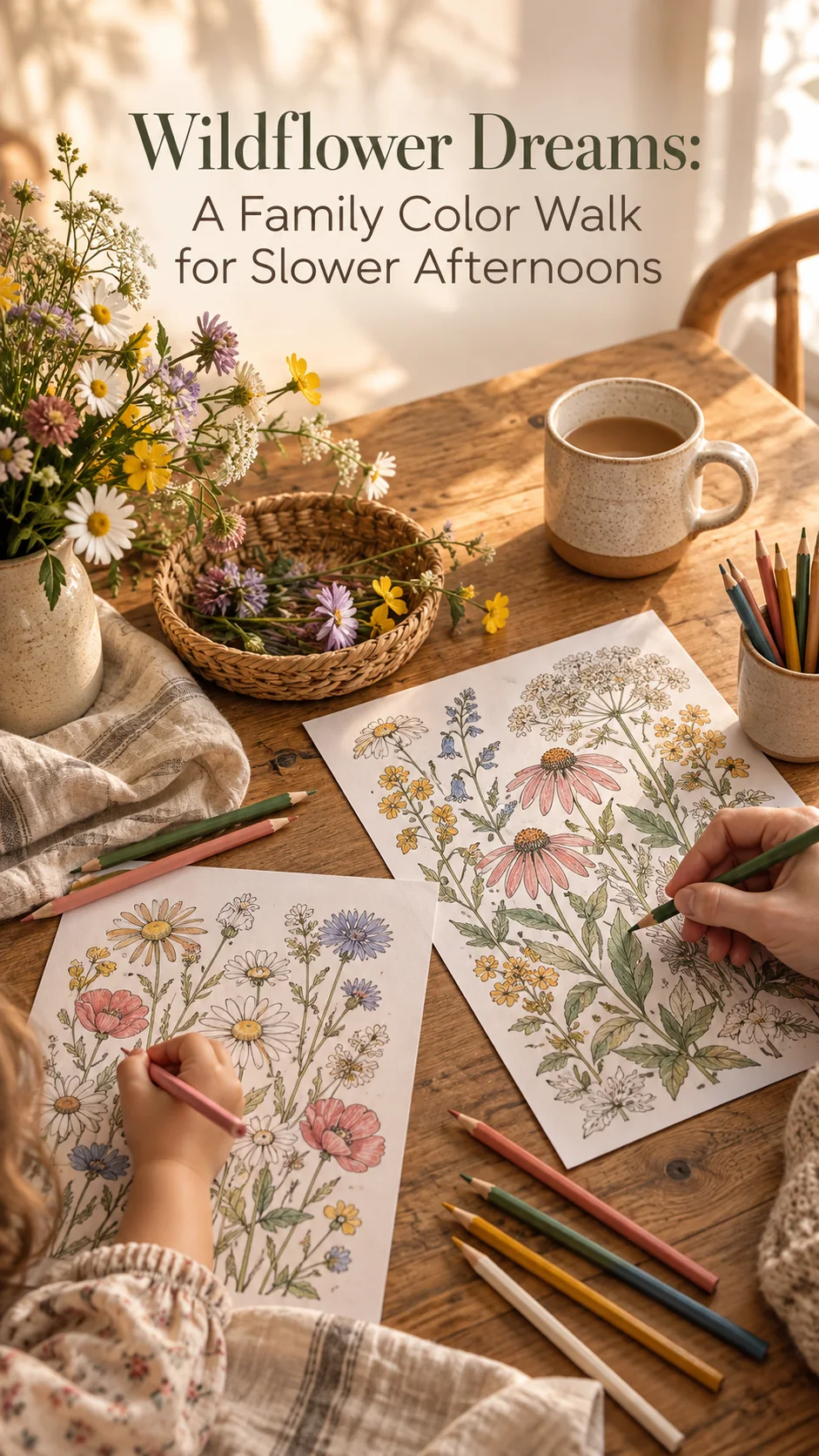
MADE FOR THIS • FAMILY ACTIVITY |
A gentle, low-prep way to notice the season, make art together, and let every page turn out differently
Oct 7, 2026 • Made for This
The goal is not a perfect picture. It is a shared hour that feels easy enough to enjoy.
Wildflower Dreams: A Family Color Walk for Slower Afternoons
Some afternoons do not need a bigger plan. They need a small change of pace: shoes by the door, a few pencils on the table, and permission to notice what is already growing nearby. A family color walk turns an ordinary trip around the block, the yard, or a local path into the beginning of an art session. Instead of rushing toward a finished project, everyone gathers colors, shapes, and tiny details to bring back home.
This activity works because it leaves room for different ages and energy levels. A younger child can look for “something yellow” or “a leaf shaped like a heart,” while an older child can photograph a flower, sketch its outline, or invent a new color combination. Adults get to participate too, not as art directors but as fellow observers. The result is less pressure, more conversation, and a table full of pages that belong to the people who made them.
Begin with a walk, not a worksheet
Start by choosing a route that feels manageable, even if it is only from the front step to the end of the driveway. The purpose is not to identify every plant. It is to notice differences: a dusty green leaf beside a bright one, the soft brown center of a flower, a stem that bends, or petals that do not match perfectly. If you want to collect something, use fallen leaves or petals and leave living plants where they are.
Give each person one simple mission before you begin. One child might watch for three shades of green; another might count how many flower shapes appear; an adult might look for an interesting texture to draw later. A tiny mission keeps the walk focused without turning it into a lesson that has to be completed correctly. Ten or fifteen minutes is enough to come home with a whole palette of ideas.
Build a palette from what you actually saw
Back at the table, place the pencils where everyone can reach them and look at the colors together before anyone starts coloring. Instead of choosing the most familiar green, compare two or three greens and ask which one feels closest to the leaf outside. Mix in blush, ochre, dusty blue, or soft violet when a flower calls for it. Children often make more confident choices when color is treated as observation rather than a test.
There is also room for imagination. A real flower may inspire the page without controlling it. Someone can turn white petals peach, add blue shadows, or invent a patterned stem. The walk offers a starting point; the coloring page becomes a place to interpret what stood out. That balance lets the activity feel connected to the real world without limiting creativity.
Share the table without matching the results
The easiest way to make family art feel stressful is to compare pages too early. Try giving everyone their own sheet, including the adults, and wait until the end to look across the table. One person may fill every inch with color, another may outline only a few petals, and someone else may spend most of the time arranging pencils. Those are different ways of participating, not different levels of success.
When a child asks, “Does this look right?” answer with a noticing question instead of a verdict. Ask what color they saw on the walk, which flower they like best, or what they want the picture to feel like. That keeps ownership with the artist. It also makes the conversation more interesting than a stream of automatic praise, because it shows that the details of their choices are worth seeing.
Let the picture carry the conversation
Coloring side by side gives families a softer way to talk. Eye contact is optional, hands stay busy, and the subject can move naturally from the page to the day. A child may mention a classroom moment while choosing a pencil, or an adult may explain why a certain flower reminds them of someone. Nothing has to become a deep discussion; the shared rhythm is valuable on its own.
If conversation slows, use the page as a prompt. Which flower would grow beside your dream house? What would this garden smell like after rain? Which color would you save if you could keep only one? Questions like these invite stories without making the activity feel like homework. They also help younger children stretch an idea beyond the picture in front of them.
Keep cleanup small enough to make it repeatable
A lovely activity loses its charm if the aftermath takes longer than the fun. Use one shallow tray or basket for the pencils, paper, sharpener, and a small envelope for fallen petals or leaves. Put a washable cloth under the pages if you are working with younger children. When the table is cleared, date the back of each page and choose one place for finished art—a clipboard, a simple folder, or a rotating frame.
The repeatable version matters more than the elaborate version. You do not need a full craft cabinet, matching supplies, or an afternoon with no interruptions. You need a route, a few colors, and a table that can hold everyone for a little while. The activity becomes a family ritual when starting and stopping both feel easy.
A simple 45-minute color walk
- Notice for 10 minutes. Choose one color, shape, or texture to look for outside.
- Set the table in 5 minutes. Lay out two or three pages, a shared pencil basket, and any fallen finds.
- Color together for 25 minutes. Let each person work at their own pace while conversation comes and goes.
- Close in 5 minutes. Share one favorite detail, date the pages, and return supplies to one container.
The practical takeaway
Plan the smallest version you would still enjoy on a busy day. Put the pencil basket and two coloring pages somewhere visible, choose the route before you announce the activity, and stop while the mood is still good. If the family wants to keep going, that is a bonus. Success is not a gallery-ready page; it is a calm, shared pocket of attention that can happen again.
When you are ready for the next low-prep activity, browse the Made for This guides. Choose the guide that fits the season you are in, then use one small page or prompt as the next practical step rather than trying to create an entire perfect afternoon at once.
Sources and editorial note
This is an original lifestyle and family-activity article. It does not make research-dependent health, dental, or safety claims, so no external sources were required. Families should adapt the route, materials, and supervision to their children, setting, and household needs.