
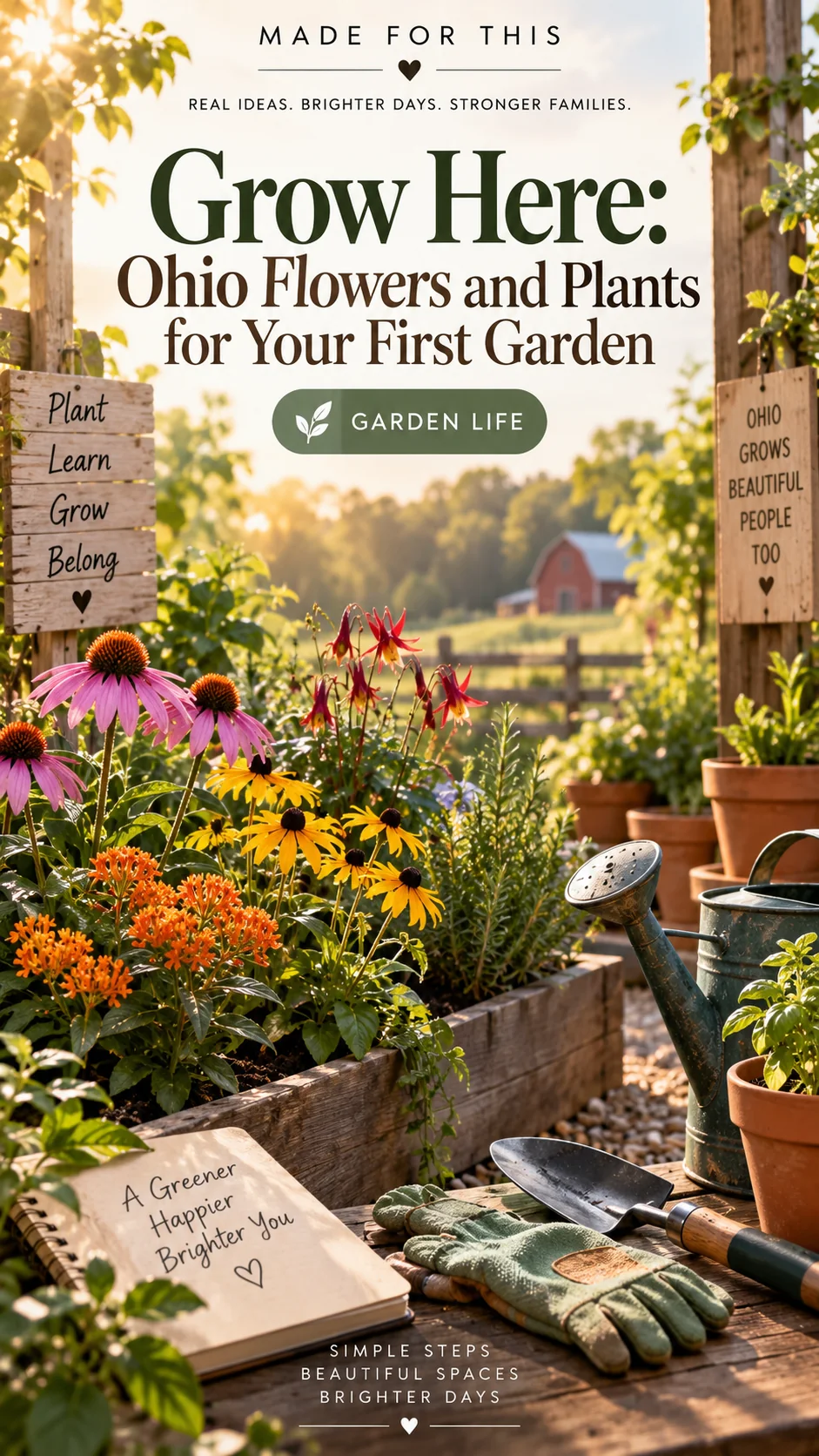
Grow Here: Ohio Flowers and Plants for Your First Garden
MADE FOR THIS | Garden Life | State-by-State Series 01
Welcome to Grow Here, our state-by-state gardening series. We are starting in Ohio with a manageable first garden: a few plants chosen for the place you have, a small area you can care for and enough curiosity to notice what happens through the seasons. You do not need a picture-perfect cottage border to begin.
Let your address and yard guide the plan
Ohio is not one identical growing environment. Use your ZIP code in the USDA Plant Hardiness Zone Map to check winter cold suitability. The map describes average annual extreme minimum winter temperature; it does not tell you your soil drainage, daily sun or last frost date. Record those separately and ask your local Extension office for planting guidance when timing is uncertain. [1]
Choose a sunny pair with room to grow
Purple coneflower, Echinacea purpurea, is a useful candidate for a sunny, well-drained bed, with pink-purple flowers and prominent centers. Black-eyed Susan, Rudbeckia fulgida, brings yellow flowers with dark centers and suits sun to partial shade in well-drained soil. Check the mature size on the specific cultivar's label before deciding how many fit. These are candidates to match to your site, not a guarantee for every Ohio yard. [2, 3]
Add butterfly weed where drainage is good
Butterfly weed, Asclepias tuberosa, offers orange flowers and serves as a monarch caterpillar host. Choose a sunny location with well-drained soil; a persistently wet low spot is a poor match. Its taproot makes moving an established plant difficult, so choose the position carefully. It should not be eaten; handle it with gloves and keep children and pets from chewing it. [4]
Give partial shade its own plan
Wild columbine, Aquilegia canadensis, is an option for a partly shaded, well-drained spot, with red and yellow spring flowers. It belongs in a different planting conversation from sun-loving butterfly weed. Do not force the same shopping list into every part of your yard. Take a photo of the intended location and notes about its light to a reputable nursery or Extension volunteer. [5]
Start with a bed you can reach
Mark a small area and place the plants, still in their pots, where you think they belong. Check label spacing and whether you can reach the center for weeding without stepping through the plants. A repeated group can be easier to organize than one of everything. Leave room for mature growth rather than filling every gap on planting day. Keep a sketch with botanical names so you can recognize what returns next year.
Build a longer season over time
Ohio State Extension recommends thinking about a sequence of blooms and supporting pollinators with suitable plants. Its suggestions include coneflowers, milkweeds and annuals such as zinnias. An annual is a seasonal addition, not a substitute for checking perennial hardiness. You can start with summer flowers now and research a spring or fall addition for a future planting season. [6]
Make the first year about establishment
After planting, monitor moisture at the root zone and adjust care for rainfall and conditions. Drought tolerance in an established plant does not mean a new transplant never needs attention. Keep notes on flowering, drainage and what struggled. That record becomes next year's best shopping list. Download the five-page Ohio guide for a site worksheet, plant shortlist and seasonal planning page. Future entries in Grow Here will use the same local-first approach.
Companion guide
Open the five-page companion guide
Sources and further reading
[1] USDA - Plant Hardiness Zone Map
[2] NC State - Purple coneflower