
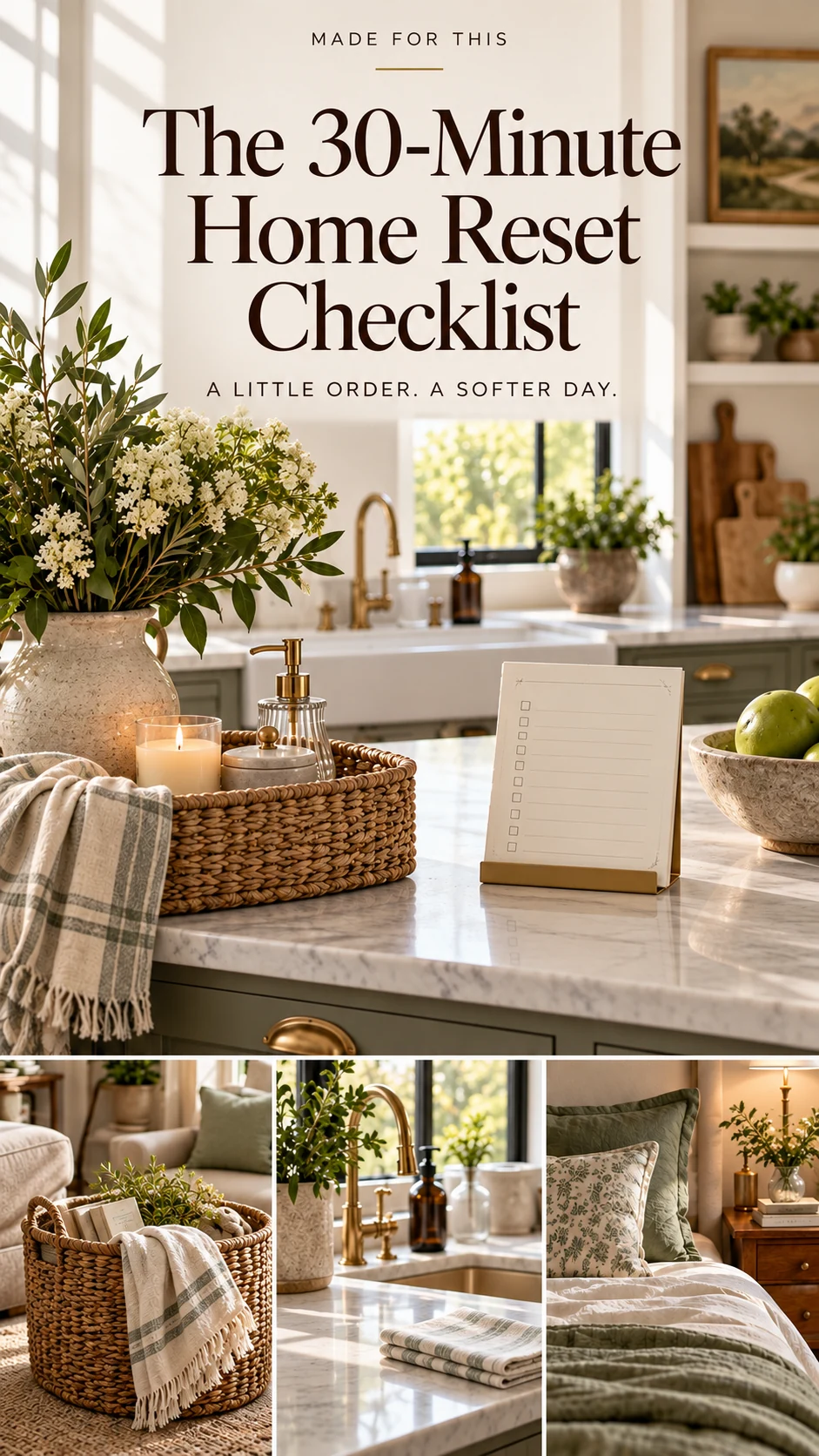
When life gets full, a short reset can make the spaces you use every day easier to use. The goal is a functional home, with room for real family life.
Set a thirty-minute timer and work through the steps below. Adapt the order to what your household needs today, and stop when the timer ends.
Before the timer starts Choose one basket, one bag for ordinary trash, and the cleaning supplies you already use. A home reset is easier when it has a clear boundary: thirty minutes to restore the spaces that carry the next part of your day. Save reorganizing drawers, sorting every paper, and buying storage bins for a different time. Those projects can swallow the whole session without making dinner or tomorrow morning any easier.
Walk through the space once and decide what matters today. If the kitchen cannot be used, start there. If the walkway is crowded, clear it first. If you need to leave early tomorrow, prepare the exit. Your priority can change from one reset to the next. The checklist gives you a starting point; it does not know your household better than you do.
Minutes 0–5: gather what has wandered Move through the main living area with the basket. Collect toys, shoes, books, and items that belong somewhere else. Put obvious ordinary trash in the bag. Skip anything that needs a decision. A school form belongs in an action spot; an unfamiliar receipt can wait until you have time to read it.
Use the basket as a temporary collection tool, rather than a permanent home for everything. If you have another adult or an older child helping, one person can return the easy items while another clears the next space. Younger children can choose a simple job, such as putting their own toys in a familiar bin.
Minutes 5–12: make the kitchen usable Choose the action that opens the most working space. Gather dishes, load the dishwasher if you use one, or wash the essentials you need next. Clear enough counter space to prepare a meal. Put away food appropriately and wipe the cleared surface using your normal household routine.
This is not the moment to empty the refrigerator or scrub every cabinet. A usable sink and a clear preparation area are enough for this round. If the dishes take longer than seven minutes, stop at the most useful point and leave a clear note about what remains. You are protecting the time limit, not racing against it.
Minutes 12–18: restore one daily zone Pick the table, the sofa, or the place where you work. Return the items that belong there and remove what prevents its ordinary use. At a desk, that might mean opening the notebook to the current task and placing the charger beside the laptop. At the table, it might mean making enough room for the next meal.
Resist styling the whole room. Straighten the blanket if you want to, but do not lose the reset in arranging pillows. A zone succeeds when it supports an activity your family needs. A lived-in room can still be ready for reading, homework, dinner, or a few quiet minutes.
Minutes 18–24: prepare the exit Check the next departure. Put keys in their usual place, find the bags, and gather the clothes or equipment needed first. Ask each person to take responsibility for their own items where age and ability allow. A signed form can go directly into the bag that will leave with it.
Make one short list of anything you could not finish. Write a specific action, such as “find the blue water bottle after dinner.” A vague reminder to “get organized” adds another decision. A clear next step helps you return to the task without rebuilding the whole plan.
Minutes 24–28: finish one small loop Choose one unfinished task that can close in four minutes: put the folded towels away, empty the small trash bin, or return the basket's remaining easy items. Leave complicated paperwork and larger cleaning jobs alone. Ending with one completed loop can make the reset feel settled without turning it into an evening project.
If the basket still holds things that need decisions, put it somewhere intentional and choose a time to sort it. Otherwise, the clutter has simply changed locations. The follow-up can be small: ten minutes after breakfast, or one category at a time.
Minutes 28–30: stop and notice Put your supplies away and look at what now works. You may have a clear table, a usable kitchen, and a bag ready by the door. That is a complete reset even if the rest of the house still looks like a family lives there.
Keep a copy of the checklist near the place where you begin. After three tries, cross out any step that consistently adds little value and replace it with the task your household actually needs. A useful routine becomes more personal with practice.